Nvidia Stock Price Drops Despite Explosive AI Chipmaker Growth
- The gap between Nvidia’s record-breaking earnings and its lagging share price widened on Thursday, as the AI chipmaker’s stock slumped despite forecasting strong growth throughout the year. This divergence highlights investor hesitation, even as Nvidia continues to dominate the AI hardware market.
- Many investors remain uncertain about whether the massive AI infrastructure spending driving Nvidia’s growth can be sustained. Concerns about long-term demand, coupled with broader anxiety around artificial intelligence, are acting as a headwind for tech stocks across the market.
Key Takeaways
Nvidia Stock Price Falls Despite AI Revenue Boom
Nvidia’s revenue is surging at record levels, with margins holding strong, yet its stock continues to tumble. On Wednesday, the company blew past fourth-quarter earnings estimates and projected even faster revenue growth in the current quarter. Analysts across Wall Street quickly raised their forecasts, signaling confidence in Nvidia’s ability to sustain momentum in the AI chip market. UBS analyst Timothy Arcuri boosted earnings estimates for the next two fiscal years, while Bank of America’s Vivek Arya extended his outlook through the next three.
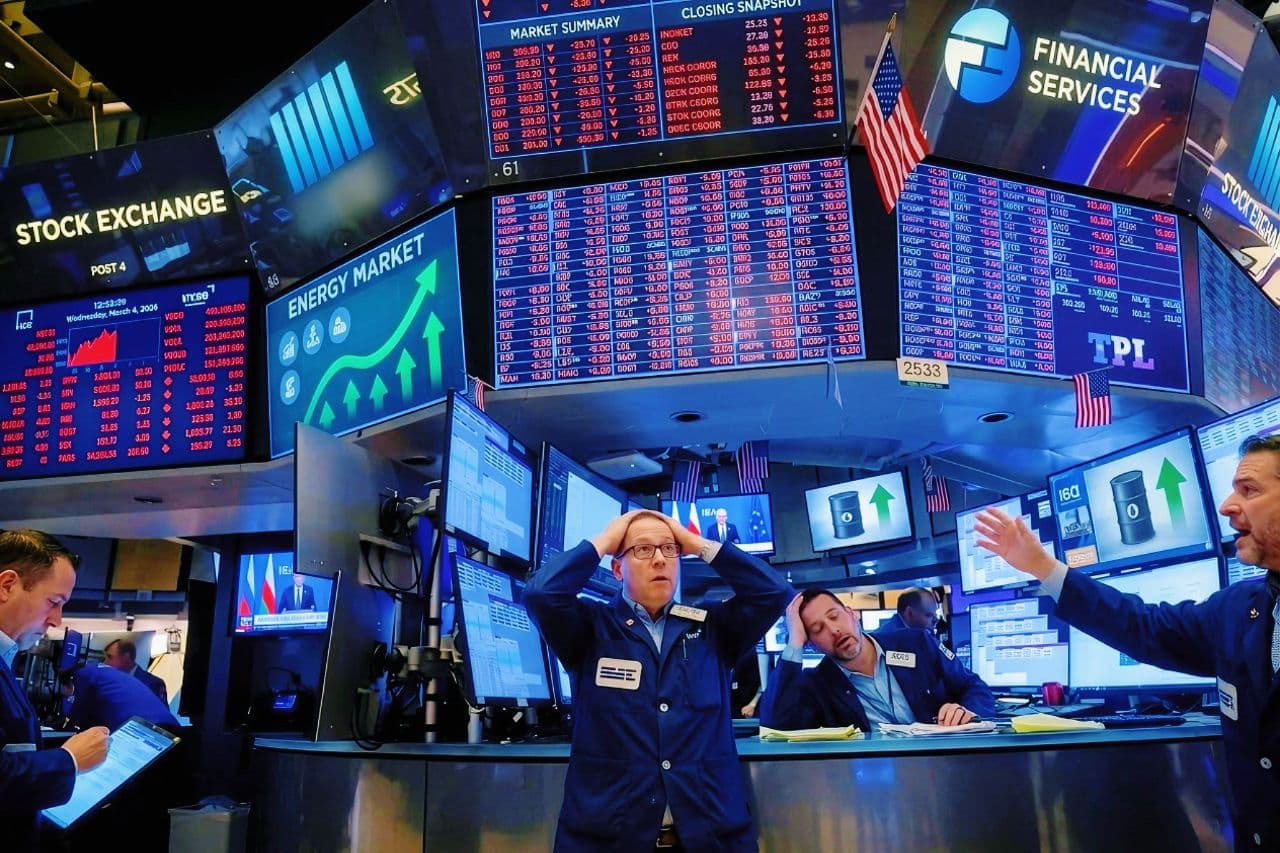
Despite this wave of optimism, Nvidia shares dropped more than 5% on Thursday, erasing year-to-date gains and leaving the stock more than 10% below its October all-time high. The decline highlights a growing disconnect between Nvidia’s financial performance and investor sentiment. While the company continues to dominate AI infrastructure, market psychology is weighing heavily on its valuation.
This paradox reflects broader concerns about whether AI spending can remain sustainable at current levels. Investors are cautious about long-term demand, even as Nvidia’s fundamentals remain strong. The tension between booming business results and lagging stock performance underscores how sentiment can overshadow earnings in the short term.
Looking forward, Nvidia’s trajectory will depend on whether investor confidence rebounds in line with its accelerating growth forecasts. If analysts’ projections hold true, the company could regain momentum as the backbone of global AI infrastructure. For now, however, its stock remains under pressure despite delivering some of the strongest results in the tech sector.


Nvidia has been one of the biggest drivers of overall market returns in recent years, thanks to its dominance in artificial intelligence hardware. Yet in recent months, the company’s stock has lost momentum even as its business continues to thrive. This disconnect underscores the uncertainty surrounding even the strongest AI bets, where investor sentiment can diverge from financial performance.
The slowdown in Nvidia’s share price reflects broader market caution. While its revenue and margins remain robust, investors are questioning whether AI infrastructure spending can sustain such rapid growth. This hesitation has created volatility, showing that even a bellwether like Nvidia is not immune to shifts in confidence.
At the same time, Nvidia’s outsized role in driving market gains means its performance carries weight far beyond its own valuation. When Nvidia stumbles, it can ripple across indexes, amplifying concerns about the durability of the AI-driven rally. This makes its stock trajectory critical not just for shareholders but for the broader tech sector.
Ultimately, the situation highlights how booming fundamentals don’t always translate into rising share prices. Market psychology, sustainability fears, and broader tech headwinds are combining to hold Nvidia back, despite its position as the backbone of global AI adoption.


Nvidia Stock Discount Despite Explosive AI Earnings
For most of the past three years, Nvidia’s stock surged in lockstep with its profits, multiplying twelvefold between late 2022 and mid-2023. But momentum shifted. In the five months leading up to Wednesday’s earnings report, Nvidia shares traded sideways even as earnings estimates climbed nearly 40%, according to Goldman Sachs. This divergence highlights a growing disconnect between fundamentals and investor sentiment.
Heading into the report, Nvidia stock was trading at a steep discount compared not only to its historical valuation but also to its tech peers. Its price/earnings-to-growth (PEG) ratio sits at about 0.5, the lowest among mega-cap tech stocks, according to Bank of America. By comparison, Broadcom and Oracle hover around 0.6, while Tesla’s PEG ratio reaches 5.1. Traditionally, a PEG below 1 signals undervaluation, yet Nvidia’s case suggests investors are pricing in caution rather than opportunity.
Goldman Sachs analysts point to “over-earning” fears as a key explanation. A dominant market position in the near term can spark concerns about sustainability, especially as competition intensifies and demand uncertainty grows. Investors, wary of a potential slowdown, begin paying less for each dollar of profit, compressing multiples even as earnings rise.
This paradox underscores how market psychology can overshadow financial strength. Nvidia’s booming business remains intact, but investor anxiety about long-term AI demand has capped its valuation. The stock’s discount may reflect short-term sentiment rather than fundamentals, leaving room for recovery if confidence stabilizes and growth proves durable.


Nvidia Stock Faces Law of Large Numbers Challenge
Morgan Stanley analysts noted Thursday that Nvidia’s low multiple “does make sense,” given its nearly $5 trillion market cap and limited margin leverage due to already high profitability. In effect, Nvidia is running into the Law of Large Numbers, where sustaining rapid growth becomes increasingly difficult as a company scales. This natural ceiling is weighing on investor sentiment, even as the company continues to deliver strong results.
Still, Morgan Stanley argued that the pessimism surrounding Nvidia shares isn’t entirely rational. They pointed out that despite concerns of slowing growth, evidence shows corporate, consumer, and sovereign adoption of AI is expanding. Near-term acceleration in demand suggests Nvidia’s fundamentals remain intact, even if investors are hesitant to fully price in its potential.
Some experts believe the market will eventually come around. UBS analyst Timothy Arcuri wrote that “it is hard to see how the stock continues to languish,” projecting Nvidia’s earnings growth to accelerate in the second half of the year. He expects growth at other AI-focused companies, such as memory and semiconductor players, to begin decelerating, leaving Nvidia in a stronger relative position.
This outlook highlights a paradox: while Nvidia’s scale creates natural valuation challenges, its role as the backbone of global AI adoption could sustain growth longer than skeptics anticipate. If investor confidence rebounds, Nvidia’s discounted multiples may prove temporary, setting the stage for renewed momentum in the stock.


The Bottom Line
Nvidia’s booming business continues to deliver record-breaking earnings, yet its stock price lags behind. Analysts point to the company’s massive scale nearly $5 trillion in market cap as a natural ceiling for growth, invoking the Law of Large Numbers. While profitability remains high, limited margin leverage and investor caution have compressed multiples, leaving shares undervalued compared to peers.
Despite this, pessimism isn’t fully justified. Evidence shows AI adoption is expanding across corporate, consumer, and sovereign sectors, suggesting Nvidia’s fundamentals remain strong. Morgan Stanley highlights that near-term acceleration in demand contradicts fears of slowing growth, while UBS projects Nvidia’s earnings will accelerate in the second half of the year.
The paradox lies in market psychology: investors are hesitant to pay for each dollar of profit despite Nvidia’s dominant position in AI infrastructure. This disconnect between fundamentals and sentiment has created volatility, but experts argue it may be temporary.
If confidence rebounds, Nvidia’s discounted valuation could prove to be an opportunity rather than a warning sign. With accelerating earnings forecasts and expanding AI demand, the company remains positioned as the backbone of global artificial intelligence, even if its stock performance has yet to catch up.